Showing posts with label Neuroscience. Show all posts

Wednesday, May 20, 2020

Neuropossibility

The human brain is an incredibly complex and diverse organ.  The most recent estimate is that the brain contains 86 billion neurons, and each neuron has the potential to make tens of thousands of synaptic connections with other neurons.  This means that there are well over 100 trillion possible synaptic connection that can be made in the brain, and countless neural pathways.  

With the sheer number of potential connections, it is easy to understand that no two brains are the same.  Despite this diversity, there are inevitable similarities as well.  And where there are similarities, there are statistical norms and averages. Prominent patterns have emerged over time creating a definition for what is normal, for what is the expected outcome based on averages.  This does not mean that average is 'good' or 'better.' Average is nothing more than a mathematical probability.

Even with all of the complexity and diversity of the human brain, prominent patterns have emerged over time. The neurotypical brain is a brain that has forms, structures and processes that fall within the statistical norm in certain categories.  When they fall outside the statistical norm, they can be referred to as non-neurotypical, neuroatypical, neurodivergent, or more colloquially; strange, odd, different or weird.

The term 'normal' is often used synonymously with words like average, typical, standard or appropriate.  In this case, 'abnormal' would be better or worse than average, atypical, unusual, special, or inappropriate.  But this is a false definition, because any two things are going to be different from each other.  These differences offer a variety of challenges as well as opportunities and are more often subjective based on perspective.

Beyond what is considered neurotypical, patterns will emerge. Methods of processing information, behaviors, or observable actions may manifest outwardly, making them more readily identifiable and divisible. More observable differences create more perceived separation, and new patterns emerge which are used to further assign individuals into categories creating generalized classifications and labels according to associated traits.

Someone who is introverted, is autistic, or has ADD, or someone who experiences hyperthymesia or dyspraxia might have common traits which are similar to others of that subgroup. Or they may not.  They may have traits similar to others outside of the subgroup.  Or they may not.  Imagine a Venn diagram of nearly eight billion circles of varying shapes and sizes, one for each human being on the planet, laid out on a single image.  It be would full of overlap and outliers.  A mosaic of human potential in which each person shares some traits with one group and some traits with others.  

Imagine a box of clear marbles.  They may vary in size or have other unique characteristics, but they all share the common trait of clarity.  If you add another clear marble, it easily falls into conformity with the rest.  But, add a red marble and it becomes easily identifiable.  Even if it has a similar shape or density to other marbles in the box, because it does not conform to the most common identifiable characteristic of the rest, it will inevitably be set apart from the rest. The clear marbles may have other characteristics that make them different but they all share an easily identifiable trait. The red one is more different, a judgement based on a feature that has been determined as most relevant.    

Our species has a penchant for patterns and order.  Class systems, cliques, hierarchies are all social constructs used to place people into groups that can be identified, organized and labeled.  We name the groups, then we come up with terms for what is outside those groups. The term "on the spectrum" denotes something separate from the majority, when in reality, every single human being on the planet is on the spectrum of neuropossibility.  In light of this, the range of human potential goes beyond our ability to calculate.  Within this range of opportunity, patterns will inevitably emerge, but patterns are not rules.  Nor are they standards of what is acceptable and what is not.

The spectrum of human neural development is not a linear spectrum. It is a multidirectional patchwork of trillions of potential outcomes and possibilities ranging from how the brain is physically formed, to how neurotransmitters are produced.  From how it functions and processes information to how it changes and adapts as a response to outside stimuli.  The potential outcomes are incalculable.

While we cannot ignore differences, we can be aware of which differences we are more likely to accept and which we are not.  While we may weigh out some unifying factors as more important or more valuable, the only single unifying factor that we all share is that we are all different. 

Friday, March 27, 2020

Why can't you just focus?

Why can't you just focus? 

Structures of the neurodiverse (ADD/ADHD) brain 


What is often frustrating for parents, teachers, and even individuals with ADD/ADHD is how they can focus intensely in some instances but struggle to sit still and work in others.  How can someone choose to work for extended periods of time on one thing only to insist that it is impossible for them on another?  Instead of being able to motivate themselves internally, there seems to be the need for an external motivator, a parent or teacher, standing over their shoulder to keep them on task.

In this case, it is important to remember that internal motivation is often a product of self-regulation, and self-regulation can be much more challenging for the neurodiverse brain.  Understanding the difference between self-regulated focus and concentration, and interest-based focus and concentration is key to understanding the external behaviors of individuals with ADD/ADHD.  It is important to keep in  mind this neurological difference and how it manifests in behavior.  Distinguishing these differences can help bridge the gap between attention and focus.

You've probably had this experience.  You're watching TV, reading a book, working on homework or some other task and you are interrupted by someone asking you an unrelated question.

"What time is your appointment tomorrow?"

"Huh?  What did you say?" And then, before they can repeat their question, you answer it. "It's at noon." 

The  momentary delay is the result of the brain switching from one context to another. This is the primary difference between attention and focus or concentration.  Attention is a function of the brain to ensure that you are aware of your surroundings. It is hearing the question; it is the sensing of stimuli.  Focus is the conscious investment into a specific task or stimuli; it is thinking of the answer and then vocalizing it. 

Sustained focus can be achieved without conscious choices or deliberate actions.  Getting caught up in a conversation with a friend or becoming hyper-focused on a competitive game or activity are often achieved with little conscious effort.  Hyper-focus can be unintentional, and is usually based on personal value, entertainment or pleasure, or pressing need. Each of these can help someone get lost in what they are doing, or what has come to be known as "flow state."

Achieving this intense focus can be difficult at times and may require conscious choice or deliberate actions.  This is where the Prefrontal Cortex plays a vital role.  It falls under the domain of executive function to force ourselves into this flow state.  This might involve finding a quiet place to work, setting a timer to help manage time and attention, or simply telling ourselves "I have to get this done."  Turning off the tablet or cellphone, going to the library or setting specific parameters for how long you will work on something are all conscious choices to limit distractions and limit our attentive spectrum. One of the major differences between a neurodiverse ADD/ADHD brain and a neurotypical brain is determining what it should focus on from a wide variety of attention grabbing stimuli. Differences in brain structures and functions can drastically affect the transition from attention to focus.

Major areas of the brain that help to regulate focus and attention are the Prefrontal Cortex; the Reticular Activating System (RAS); the Limbic System, which helps regulate emotions; and the Basal Ganglia, which is primarily associated with executive movements, but also plays a role in attention by working with the cerebral cortex to control desired actions. Each of these regions of the brain play a role in attention and focus, and each of these regions of the brain can be affected in someone who has ADD/ADHD. In this case, it might lead to an inability to focus or lack of motivation.  It can also make it difficult to avoid distraction or control emotions.  These are all examples of self-regulation that are more readily facilitated by a neurotypical brain.

The term "attention deficit" is somewhat misleading in that the ADD/ADHD brain may be highly attentive, but struggles to narrow focus to a single stimuli or action.  One of the functions of the Basal Ganglia is to transition between the involunary and the voluntary.  It acts as the brakes of a car that allows the driver to more easily control where it is going.  Similarly, the limbic system helps to control and regulate emotions while the RAS determines what stimuli should merit our conscious attention and what can be ignored. The Prefrontal Cortex is in charge of executive function, or the ability to self-regulate which plays a major role in transitioning from attention to focus.

When these areas of the brain are affected, it can be challenging, if not impossible to maintain focus on a task.  Additionally, it is difficult to even reason WHY a task should merit focus and attention. The ability to consciously focus, to limit distractions, or to assign meaningful ancillary value are all facets of self-regulation and can be hindered in the ADD/ADHD brain. For example, jumping through a hoop has no immediate value in and of itself, but may be a part of a larger process.  The neurotypical brain can rationalize the importance of the hoop as a step towards a large goal, the neurodiverse brain struggles with the lack of immediate value or relevancy; it may even rebel against it.

Yet, the neurodiverse brain is absolutely capable of sustained focus and attention, if not hyper-focus. It just often requires it to be interest-based.  If a stimuli or activity is novel, urgent, or high interest, there is often no noticeable hindrance in thinking or activity by an individual with ADD/ADHD. Flow state is achieved if and when there is immediate and inherent interest. 

While the neurotypical brain will also focus on something that is interest-based, it has an easier time assigning secondary value to a task which is not perceived as engaging or interesting. This might be rationalizing that is important to someone else, or that it is needed to achieve a desired grade our outcome.  It also makes it easier to perform the task if there is an associated reward or punishment.  This is why pleading or bribery may not work on a child or student with ADD/ADHD, as they may find it more difficult to assign secondary value to a primary activity.  Differences in these neurological forms and functions affect the ease and ability of making the choice of when and how to focus.

Understanding these differences in how the brain weighs out sensory information and stimuli may help some of the confusion and frustration that can accompany ADD/ADHD.  Due to the incredibly complex and interconnected nature of the human brain, it is impossible to make a judgment as to exactly what is the ideal form and function, but recognizing these structures and functions can give insight into the incredibly diverse spectrum of human thinking and cognition.  Internal values and motivators are the combination of a myriad of biological and learned factors unique to each person and they are the keys to promoting active engagement. 

Monday, July 1, 2019

The Corner of Efficiency and Laziness

If you consistently seek out the path or least resistance, you will inevitably find yourself at the bottom. 


Nielsen Norman Group is a research and consulting firm that was founded by Jakob Nielsen and Don Norman in 1998.  On their website, they have a list of clients that they have worked with since that time including companies like Google, Visa, National Geographic and The Smithsonian. In 2006, Nielsen published an article based on study of eye tracking patterns in which he introduced the "F-Shaped Pattern of Reading the Web." In essence, the F-shape is the result of reading the headline at the top of the page, skimming the left hand side with horizontal movements down the page at points of interest.
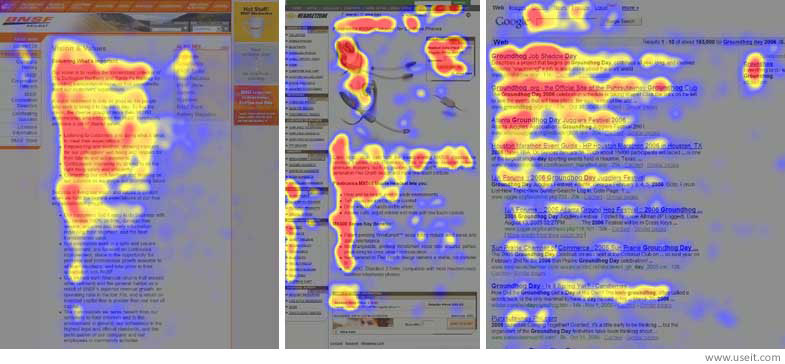
Imagine yourself reading the headline first then skimming the first few words of each paragraph, and stopping briefly on the ones that seem most relevant or interesting.   In his article, he implied that readers will not fully read a text, but focus on the the first two paragraphs and sub-headings and bullet point information. Instead of reading for depth, or to gain as much information as possible, readers are usually only looking for a few key ideas and then moving on, usually to post a comment about how much they agreed or disagreed with it.

The F-Shaped pattern of skimming a text is not the only time-saving method that is used when accessing information online.  There are several others, including the layer-cake pattern, spotted pattern, bypassing pattern an others, each designed to help the reader minimize interaction cost, the sum of efforts required to attain a goal. The driving force behind these patterns is to maximize the potential rewards while expending the least amount of time and energy to do so. It is only the commitment pattern in which an individual exert energy to fixate on all the content and read all of the material presented.

Henry David Thoreau wrote "the cost of a thing is the amount of what I call life which is required to be exchanged for it, immediately or in the long run."  Usually, even this quote is ironically truncated into "the price of anything is the amount of life you pay for it." And most, if not all living creatures on this earth are usually trying to minimize this interaction cost, trying to get as much as they can for as little as possible, whether it be time, effort, work, money, or energy.

This is the principle of least effort, and it is a principle of life at almost every level.

When certain cells move through the body, such as white blood cells or metastatic cancer cells, they choose the path of least resistance through the tissue.  Researchers have proven this by placing these mobile cells in a "maze" of different size pours. These cells would test each pour size and then follow the largest of the choices, which would be the easiest to travel through. Researches studying how E. coli adapts to treatment through ampicillin has found that it will evolve and mutate in different ways depending on the concentration of the antibiotic, effectively choosing the one that requires the least amount of "cost" to the cell to make adaptations to survive.

If something is too complex or has too little reward it is not worth the effort. 
-I'm not even going to try to make an origami swan

In the animal kingdom, several animals typify the principal of least effort as a way to survive and thrive in a harsh world. The principle of least effort is about conserving energy or being as efficient as possible.  Examples include spotted turtles who spend winters near the bottoms of ponds and rivers and shunt their blood flow to vital organs, allowing them survive for five months without eating or breathing, penguins who waddle because walking requires too much of the energy that is required to stay warm in freezing temperatures, or birds and marine animals which use an undulating pattern allowing them to spend large amounts of time coasting downward with little or no effort.  These animals are being as efficient as possible with their energy expenditure.

This idea of being as efficient as possible, is not without its danger.  Whether viewed as the principal of least effort, or simply being as efficient as possible, this parsimony also removes the benefits of having to adapt through effort.  Anthropologists studying the evolution of two different human ancestors and the development of jaw muscle and tooth structure found that despite having different diets, both developed similar musculature and teeth.  The development was sub-optimal for the species, but workable for their diets because it required less adaptation.  It wasn't suited for the diet, but good enough without going through the rigors of adaptation.

Similar adaptations, or lack of adaptations have occurred with much more drastic results.  These include the vestigulation of certain traits, structures, or behaviors over time when they are not used.  This might include the loss of eyes in certain species of fish through epigenetic adaptation.  Simply put, because they did not use their eyes, they eventually disappeared from the species. Another example include flightless birds who at one point in history were capable of flying, but lost the ability simply because they no longer needed to do it.

When an activity lacks enough challenge, when it crosses the line from engaging to boring, the value that is attached to the reward also also diminishes and the skills or attributes required to accomplish it atrophy.  This is why as human beings develop, we usually find less enjoyment in activities that once kept us entertained as children.  In video games, once a level is mastered we seek for something more challenging, when we are able to ride a bike with training wheels, we quickly desire to take them off.  Yet, when we consistently are faced with activities that require no effort, are too easy, we lose desire to continue with it, even leaving rewards behind. In addition, and even more of a detriment to ourselves, we can also lose the necessary skills or knowledge we gained to become proficient in that specific area.  The term commonly used is "rusty."

If something is too easy, we do not feel a sense of accomplishment and are quick to drop it.
-Folding a piece of paper in half is boring so why even practice?

The question of whether these changes are overall net losses, or overall net gains depends on how you assess what is valuable and what is not. For human beings living in today's world, it goes simply beyond a calculation of work versus reward. Optimal happiness, feelings of success, motivational factors and personal choice all play a role in the decision about how much work someone is willing to do for a given result, but never before in history has a species been capable of getting so much "reward" at the expense out of so little work, and we might not fully understand the negative effects.

In 1949,  Harvard linguist George Kingsley Zipf proposed the principle of least effort as it pertained to human language.  He posited that language was evolving to become more efficient, using words such as math in place of mathematics or plane in lieu of airplane.  Language requires a certain level of complexity to convey the breadth of human thought, but once an abbreviation is understood, it is generally acceptable as a reasonable substitute.  Hi, gonna, sup, wanna, etc.  The question is at what cost comes this convenience?

In the October 2018 edition of Trends of Cognitive Science, authors Inzlicht, Shenhave and Olivola published "The Effort Paradox: Effort is Both Costly and Valued." The manuscript broke down, defined and examined the relationship between effort, motivation, rewards and satisfaction in human behavior.   The paradox comes in the acknowledgement that effort is difficult and most are averse to it.  When given a choice between exerting effort and not exerting effort for a similar reward, any reasonable person would choose not to put forth any effort.  But, effort in and of itself, adds to the reward of an item or process, or sometimes, is the reward itself.  

When given a choice between doing nothing and making $100 dollars, and putting forth great effort to make $100 dollars, most would choose to do nothing. But what if it was $100 for nothing, or $120 for something difficult? According to the manuscript, people are often willing to accept fewer rewards to avoid additional effort. Yet ironically, if someone worked for, or did something challenging for that same $100 dollars, they value it much more than the person who did nothing to earn it.  

This has been proven by studies in what has become known as the "IKEA Effect," which is that an individual, when required to work to put something together, values it much more than something that was simply given to them, even the free item has a higher financial cost. The more time and effort someone puts into something, the more they feel accomplished or a sense of self-satisfaction upon completion.  This is the basis of why the some of the greatest feelings of accomplishment come not from an event, but in the effort it took to make it to the event.  For example, physically standing on a mountain top is not the most rewarding aspect of mountain climbing, it is the effort it took to get there.  Had the person flown in a helicopter and landed on the peak, there would be little value beyond the impressive view.  

If significant time is put into something, the sense of reward is increased beyond the outcome.
-I'm keeping this origami swan forever because it took me a long time to make

Learned industriousness is the increase of motivation when a reward is increased by the effort it took to achieve.  It increases motivation for later and more challenging endeavors.  Entitlement is the unreasonable expectation of reward without effort, and it decreases future motivation for more challenging endeavors.

Motivation increases as difficulty and complexity increase, while apathy increases without stimuli forcing change.  Worse yet, when indifference is rewarded, it strengthens the aversion towards future activity-- and we live in a world where the effort to achieve has diminished to the point of worthlessness.  By making something easier, by giving more reward for less work, we are literally killing any future motivation to work towards greater goals, which is the root cause of entitlement.

If a reward is given for no effort, eventually the reward is seen as worthless.
-I'm just going to throw these origami swans away because I can get another one whenever I want

As technology increases around us, it takes on more of the responsibilities of human survival; things like farming, transportation, manufacturing and other professions. Through automation we will see a diminished need for expending any effort to acquire not only the basics of survival, but the comforts of prosperity as well.  It will take less and less effort to maintain a high standard of living, and the value placed on it will depreciate as well. Ready prepared meals delivered to your door, guaranteed incomes, lower standards of excellence, mitigated risks, instant gratification and amusements, or any program or convenience which pushes the boundaries between efficiency of indolence is more likely an unseen expense disguised as a free ride to nowhere. Contentment may soon be wither in the shadow of luxury. Like a fish with no eyes, we may find ourselves blinded by our own progress.

Unlike white blood cells, turtles, or flightless birds, human beings need to do more than "just survive" in order to maintain their overall health and well being.  Part of that survival is also a sense of accomplishment, value, contentment and contribution.  And, whether we like it or not, those feelings are the result of work put in, of effort, of struggle and facing failure.  Understanding that the greatest values of our efforts are not in the getting, but in the earning is hard lesson to learn.  It is difficult because like most things in life, the reward can only be found after the price has been paid in full, and taking a short cut only limits the journey.   


Tuesday, May 14, 2019

The Anatomy of Advantages


In the 1960's, Walther Mischel developed a simple experiment to help gauge self-control.  In the experiment, preschoolers were placed in a room with a single researcher and given a marshmallow.  The researcher would then leave the room for a period of time, but before leaving, they would tell the children they could either eat the marshmallow while they were gone, or wait to eat it and receive a second marshmallow when they returned.  

It was a pretty simple choice.  One treat now, or two treats later.

Some of the children quickly ate the marshmallow, unable to wait any amount of time for another reward.  Others, fought the urge to eat the first marshmallow and were rewarded with a second.  Researches documented which of the children were able to delay gratification, and which succumbed to the tasty temptation.  

In later studies, Mischel and his group revisited the children as teenagers to measure different areas of their lives and compare them with their results from the Marshmallow test.  What they found is that the children who were able to wait for the second marshmallow were more cognitive and socially competent, performed better academically, and coped better with stress and frustration.  Additionally, they were less likely to suffer from substance abuse, obesity, and were overall heather and more successful.


Even later still, another group of researchers from the University of Washington tracked down a portion of the original participants as adults and administered another series of tests measuring self-control.  They found that the results of the now adults were very similar to their results as preschoolers with most of them still performing along the same lines as their preschool selves years earlier.  Additionally, they also participated in an MRI scan to measure brain activity and structure.  What was discovered was that the adults who exhibited higher levels of self-control displayed more activity in the prefrontal cortex, the area of the brain which controls executive functions such as impulse control, time management, planning and decision making.  The participants who showed less self-control had increased activity in the ventral striatum, a region thought to help process desires and rewards.

According to these results, it would appear that some individuals are neurologically inclined to seek out immediate rewards while other are programmed to delay gratification in search of greater opportunities.  Similar to how some individuals are taller and better suited for basketball, or have a more efficient cardiovascular system and make better swimmers.  This also extends beyond physical attributes and into mental and psychological areas as well as some might be more likely to suffer from clinical depression or have a better ear for music.


With the massive complexity of brain matter and diverse physiological factors, it is true that some individuals are born with advantages in certain areas. Some children simply struggle to control the impulse to eat the first marshmallow more than their peers.  Some people have advantages that help them learn a second language, play the guitar or shoot a basketball, others struggle with fine motor skills or memorization which makes these skills much more difficult to master.  

This implies that some individuals are better wired for success from a young age. 

But none of these strengths and weaknesses are set in stone.  It may be more difficult for someone to learn to play an instrument, but not impossible.  It simply takes more time and effort to adapt.  Nor does it mean that the individual who is a has a natural talent for swinging a baseball bat will become a professional ball player.  What is needed in both cases is time and effort to hone their skills, and that requires self-control.

The key to this development is differentiating between the process and the product.  When making a decision, it is important to separate these two ideas.  If you have a goal of maintaining a certain weight, there is a process and a product.

Eating a quart of ice cream every night after dinner is a process.
Gaining 5 pounds in a week is the product.

Running three miles every morning is a process.
Losing five pounds is the product.

Delayed gratification is the ability to choose a more beneficial product over a less enjoyable process.  It is choosing between what we want to do and what we want to get.  There are two primary difficulties faced when making this choice: ease and immediacy.

Eating ice cream every night is easier than running every morning.  It gives more immediate positive results.  Eating ice cream now is better than running now.  Gaining five pounds is less desirable than losing five pounds, and not immediately noticed.  The contradiction of choice is apparent, but in the moment it is difficult not to make the a decision based on immediacy and ease.

In psychology, the Construal-Level Theory of Psychological Distance is based on how we view time and our relationship with it.  One area of the theory revolves around motivation, and how levels of motivations increase with the decrease of distance in space and time.  In layman's terms, the closer something is, or the sooner it is, the more important it is.  This is the framework of procrastination.  Human beings are more motivated by something that gets immediate results or is in response to an immediate need.  One marshmallow now is better than two marshmallows later. According to this model, it is not the one or two which is the deciding factor, it is the now or later. It is how we are wired from birth. 

The ability to manage time, weigh out risks, delay gratification are all processes that are controlled in the prefrontal cortex and fall under the umbrella of executive functions of the brain. It is what creates our ability to weigh out and place values on the one and the two in conjunction with the now and the later as opposed to being superseded by it.  Self-discipline is facilitated by an increase in brain matter and usage within the prefrontal cortex and is partially influenced by its structural size.  It has a naturally occurring development over time, as well as a genetic predisposition that makes it easier for some individuals to make decisions based on the product instead of the process, to choose long term goals over short term pleasures, and it comes more naturally to some than others. 

The danger is assuming that these are inescapable facets that cannot be overcome, developed, or increased over time, that this a structural or genetic identity which is permanent and not something that can change.  This concept of growth mindset has been championed over recent years by Carol Dweck and explained in depth in her book, Mindset: The New Psychology of Success.  This idea of improving intelligence, skill, or capability from a learner's standpoint as been a shift in the ideology that many people hold about a single person's ability to change, the belief that our skills, intelligence or even beliefs are static.  

Taking this a growth a step further, it is not just about mindset or belief, but it is a physical growth that occurs within the brain itself.  Neural Plasticity, the capacity for the brain to modify itself functionally and structurally has also been gaining support and attention the areas of science, education, and psychology.  One of the more stunning pieces of evidence to support this idea is contained within the brain's of London's taxi cab drivers.

In order to become a licensed cabby in London, a driver must pass a knowledge test of the roughly 25,000 streets, avenues and alleys, as well as 20,000 landmarks, businesses, clubs, hospitals, and points of interest where someone might want to go.  what makes it even more challenging is the nature of the streets, directions and placements of roads in London as it has been growing organically over hundreds of years and not built on a planned geometrical grid system with easy to follow patterns.  It is a sprawling mess on interconnected veins that make up the beating heart of England.  It takes most candidates two to four years to study for and pass the test, and only about one if five who attempt the test actually pass it, despite the fact that it can be taken as many times as you like.  

In a series of studies performed by neuroscientists, it was discovered that London taxi cab drivers had more gray matter in their posterior hippocampi, an area associated with spatial awareness.  It would seem that those who passed the test already had brain structures better suited for memorizing locations. But, in later studies performed on applicants preparing for the tests, it was shown that brain development occurred while they were working towards memorization.  MRI scans showed definite growth in the hippocampus that was not present before they began the process of preparation for the test. Additional tests showed that those who experienced this development also performed better on memory tests no associated with the streets of London than those who had not prepared for this test.  Not only did they knowledge base increase, but their cognitive functions as well.

This type of growth and development can be seen in other areas as well.  Jugglers demonstrate growth in the parietal lobe which helps process information involving how we track objects and move. Piano players show increases in areas required for auditory processing and motor skills.  Science supports the theory that our brain adapts structurally to meet the requirements of the work we choose to do.  That is the neurological principal of learning and growth. Improved cognitive function is a product; practice, work and repetition are the process. 

Metaphorically, someone who is six feet tall can quickly reach an item on an upper shelf, because they have a physical advantage to complete that task.  Someone who is five feet tall takes more time, as they have to change the structure and take the time and effort to locate and introduce a step ladder.  Some children cannot resist the urge to eat the first marshmallow because it actually is more difficult for them. That does not mean that they will always make that choice nor does it mean they are destined for failure, but, they will have to work harder for that second marshmallow.  


Wednesday, April 10, 2019

I knew when she walked in the room

A love story in the brain

Most people on the planet can relate to the experience of standing in a crowded room full of dozens of intermingling conversations and suddenly becoming acutely aware of their name being said out loud or the sound of a familiar voice. Or of knowing when that special someone walked through the door as if cupid was tapping you on the shoulder.  

What is it that makes us notice that person, or our name, or to become overly conscious of anyone wearing a hat or t-shirt of our favorite sports team or band? Of all the thousands of individual stimuli that enter the brain on any given moment, why do some of them go unnoticed while others draw our attention immediately?  
The answer lies in the Reticiular Activation System (RAS) or Reticular Formation, a series of interconnected regions in the brain, located primarily in the brain stem that regulates the brain's level of arousal.  In other words, it helps the brain to decide what to pay attention to, and what to ignore.  This is the reason why we can fall asleep listening to music but wake up when we hear the front door open.  It is designed to focus our attention on potential threats, items of value, or people of particular interest.  

The RAS is constantly sifting through information and stimuli that passes through our senses into our brain, weighing out what requires our immediate attention and focus, and what does not.  It acts as the gatekeeper of our consciousness.

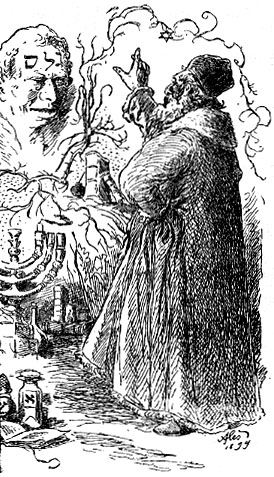
In Jewish lore, there are several references to a creature called a Golem.  Golems are creatures that were created out of inanimate matter and then magically imbued with life.  In one such version, there is a village that is surrounded by forest.  The villagers, afraid of unknown creatures that might be lurking in the wilderness, create a Golem to protect themselves from various dangers.  The Golem, tasked with protecting the villages, goes to work patrolling the forest.

Unfortunately for the Golem, and for the village, there were no real dangers to speak of, and the Golem, bored and without purpose, began to cause problems around the village until it became the very danger that it was created to protect the village from.

The villagers so desperately wanted there to be unseen problems, that they unwittingly created them; they believed their reality into existence. While this is myth demonstrates a principal of a self-fulfilling prophecy, the potential for this type of genesis is not without scientific basis.

In the 1960's a now famous series of studies were conducted and published by Robert Rosenthal, a psychology professor at Harvard University.  The basis of his work was the principal of self-fulfilling prophecies, or what was termed expectancy effects.  In one study, researchers gave an  IQ test to an elementary school class and reported the results to the teacher.  Twenty percent of the students were chosen at random and it was reported they had "unusual potential for intellectual growth."  At the end of the year, the students were tested again and it was found that those who were labeled as more intelligent showed significant improvement over their peers.

The teacher, expecting those students to be more capable, treated them differently than the rest of the students in the class.  Whether it was more encouraging words, higher expectations, more one-on-one instruction, or a myriad of other potential causes, the teacher's expectation of the students had a marked difference on their growth as a student.  Like the Golem, because they were focusing on a specific outcome, they in turn created it.

This principal became known as the Pygmalion Effect, based on the play by George Bernard Shaw which he titled after the Greek tale of a character of the same name. In the story, Pygmalion was a famous sculpture from Cyprus who had grown weary of the base nature of the women around him, many of whom were prostitutes. In his disgust, he set out to form the perfect woman.

The master sculpture went to work intentionally crafting her form, chiseling and polishing his work to perfection.  When it was completed, he named her Galatea and fell madly in love with his creation. Pygmalion would bring her gifts, kiss and caress her form, doting ardently upon her form.

The goddess Aphrodite, impressed by the depth and extent of his affection, took pity on the sculptor.  Upon returning to his home from the temple of Aphrodite, he found Galatea had been transformed from a form of cold marble, to warm flesh.  The hardness of her features had softened to the touch and she stood before him as human as the man who had tenderly brought her forth from stone.

In the instance of the Golem, those who sought after troubles, found them; while in the story of Pygmalion, the search for something greater was rewarded by the heights of love and joy.  In each case, the characters found what they searched for, because that is WHAT they were searching for.

For individuals, when the RAS is programmed to search out specific stimuli, for instance, confirmation that a student is incapable, it begins to filter out anything that does not fit that narrative, mistakes are viewed as proof that a child can not learn and less effort is put into teaching them. When the RAS is looking for evidence of a student's capability to learn, even mistakes are seen anomalies of thinking or even divergent thought or creative thoughts and be praised, encouraging the student to work harder. These opposing thoughts, over time, will create minor changes in the way the teacher works with their students and the way the students see themselves.

Students who have negative views of themselves will see criticism as proof of ignorance instead of corrective actions, while students seeking confirmation of their intelligence will see a teacher's rebuke as proof that they are held to higher standards. Over time, these minor difference can create significant differences in growth and development in the classroom.

The human brain is responsible for interpreting, evaluation, and filtering thousands upon thousands of pieces of information every single day.  It weighs out what is important and what is not, what is true and what is false, and what we should accept and what we should not. It will help us to find what we are desperately searching for, whether it be that special someone or confirmation of our darkest fears.  In a sense, reality is dictated by the filters of our consciousness.  We human beings will see the world as we choose to see it, and that will in turn, shape the world we live in, for better or for worse.